
A tire puncture is no joke.

We’ve all been there. You’re driving along, minding your own business, when: POP! Your tire is punctured. If it doesn’t blow out, you get to spend the rest of the drive worrying about a flat. It’s stressful and sometimes scary!
You may not be able to avoid driving over a nail in a parking lot. Some things are just out of your control. But there are three simple things you can do to prevent tire punctures and keep your tires on the road longer. Let’s take a look.
The risk of a punctured tire.
No one wants a hole in their tire. It’s stressful, inconvenient and potentially dangerous. The longer you wait to fix it, the more chance you have of experiencing a blowout, ruining your tire rims and damaging your vehicle.
A punctured tired leads to low tire pressure which can reduce handling, steering responsiveness, and braking performance. This puts you at risk of losing control of your car, especially if you are driving at higher speeds and taking corners.
A punctured tire quickly becomes a flat tire and driving on a flat tire causes the metal rim to grind directly against the road surface which can bend or crack the wheel.
Driving on a flat tire for even a short distance can destroy the internal sidewalls and liner of your tire. Once that happens, the tire is irreparable and will need to be replaced.
Preventing punctures goes a long way to preserving your tires, your budget, and your peace of mind.
3 smart and simple tips to prevent tire punctures.
1. Keep your driveway clear of debris.
Nails, screws, broken glass, gardening tools: anything with a hard, pointed edge can potentially puncture a tire if you drive over it.
Your vehicle spends a lot of time in your driveway. Make keeping it clear and free from debris a priority. Remove the objects to remove the risk.
2. Avoid rough roads.
Your tires are tough but everything has its limits. Driving over pot holes, speed bumps, or rough roads under construction can expose your tires to sudden drops on hard, uneven surfaces. The impact can lead to something called a “pinch puncture.” Instead of the tire being pierced by a nail or screw, the rubber and internal cords of the tire get crushed or "pinched" directly between the hard metal wheel rim and the external hazard. When this happens, you may see a small split, rupture, or parallel pair of cuts on the tire's sidewall. (Sometimes this is called a “snake bite” puncture.)
If you have to drive on rough roads, take it slow and ease over obstacles to protect your tires.
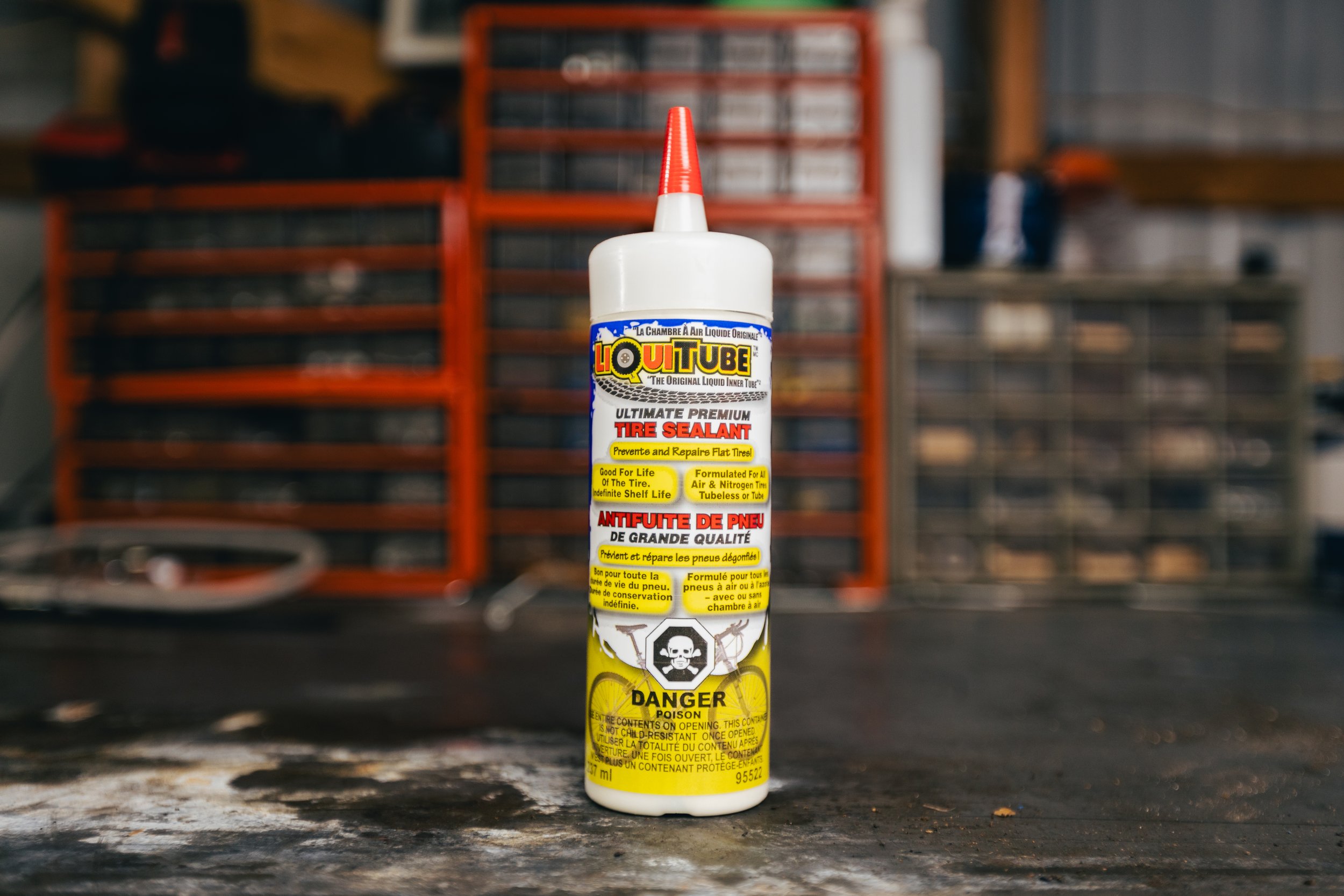
3. Treat your tires with LiquiTube Tire Sealant.
A tire sealant is a product applied to the inside of the tire via the valve stem. It is distributed throughout the tire as the wheels turn and, in the event of a puncture, that same turning motion pushes the sealant out through the hole, repairing it and preventing leaks. LiquiTube Tire Sealant is a trusted name across Canada. Its premium formula instantly repairs 1/4" punctures in small tires and up to 3/4" punctures in heavy-ply industrial tires. LiquiTube stays liquid for the life of the tire without breaking down or separating, and without causing the wheels to rust or corrode.
Preventing tire punctures saves you time, money and stress.
No one wants a punctured tire. By taking these three simple tips and putting them into action, you can protect your tires, prevent and avoid punctures, and keep them on your vehicle—and the road—longer.
Considering using a tire sealant? Choose LiquiTube. It’s easy to apply, affordable to purchase, and will help you keep your tires puncture-free. Find it at your local parts store today!
Do you want LiquiTube on the shelf at your store?
Are you a store buyer looking to stock LiquiTube? Contact NLS Products today and let us help you get this product on your shelves.
By offering LiquiTube to your customers, you're providing them with the essential product they need to prevent tire punctures and keep their wheels on the road longer.